Medical Emergency Protocol for Tricity PG Wardens (2026): First-Aid, Hospital Tie-Ups & Parent Alerts

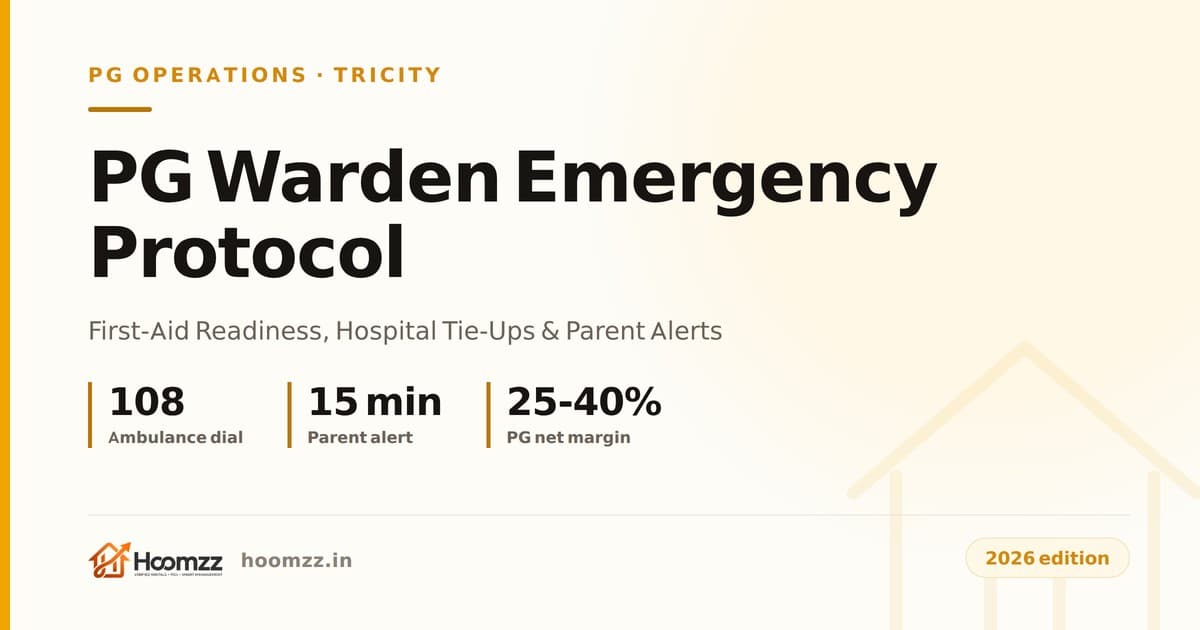
A complete operational SOP for Tricity PG wardens handling student medical crises, hospital tie-ups, and parent alerts. Learn how first-aid readiness and legal compliance protect resident safety and PG business margins in 2026.
Short answer: A Tricity PG medical emergency protocol requires three immediate actions: dispatching an ambulance within 5 minutes (via 108, 112, or direct hospital trauma lines), contacting the registered emergency parent contact within 15 minutes, and deploying a designated staff escort equipped with the resident's onboarding medical history card. Wardens must maintain a fully stocked first-aid station compliant with local municipal safety standards, maintain active tie-ups with 24/7 casualty centers in Kharar, Mohali, or Chandigarh, and log incident details to prevent negligence liabilities under Section 106 BNSS. Maintaining these life-safety standards protects high student retention, supporting typical Tricity PG net operating margins of 25%–40%.
- 5 MinAmbulance dispatchvia 108 or hospital casualty
- 15 MinParent alert windowto establish clear communication
- 25–40%PG net marginprotected by safety reputation
- ₹3k–₹6kBroker fee savedper direct bed listed on Hoomzz
Operating a student paying guest hostel across Kharar, Mohali, or Chandigarh entails serious duty-of-care obligations. With thousands of undergraduates around Chandigarh University (CU) in Gharuan, CGC Landran, and the Sector 34 coaching hub, medical emergencies will occur. High-density facilities face predictable health events: seasonal dengue, food poisoning, midnight asthma flare-ups, and sudden exam anxiety crises.
When an 18-year-old student collapses with severe abdominal pain at 2:00 AM, the hostel warden is the sole adult guardian on the ground. Wardens who panic, dispense unprescribed painkiller tablets, or wait until daybreak to alert families expose the property owner to severe operational, legal, and reputational damage. Local real estate Instagram pages and creators are an active source of listings and area info for Tricity renters today, but they rarely highlight the day-to-day operational safety networks required behind the scenes. Establishing a structured, documented healthcare standard is what protects students and preserves commercial viability.
The 4-Stage Medical Emergency Protocol for Tricity PG Wardens
A standard operating procedure (SOP) removes hesitation from late-night decision-making. Every warden, assistant caretaker, and night security guard must execute a four-stage protocol the moment a tenant reports acute illness or physical injury.
- Triage and Physical AssessmentAssess vitals within two minutes: responsiveness, pulse, temperature, and oxygen saturation. If the student shows chest pain, breathlessness, heavy bleeding, or loss of consciousness, call for hospital transit immediately.
- Ambulance Dispatch and Transit SelectionCall the state ambulance helpline (108), the centralized emergency line (112), or the direct casualty desk of the nearest pre-tied private hospital. If ambulance arrival faces delays along congested bottlenecks such as the Kharar flyover junction or Landran road, summon a verified on-call cab service or deploy the facility backup vehicle.
- Mandatory Parent Notification Within 15 MinutesPlace a direct phone call to the primary guardian listed on the student onboarding form. State verified facts calmly: the student's symptoms, vital signs, the chosen hospital, the accompanying warden name, and the direct phone number for real-time updates.
- Hospital Admission Escort and Documentation HandoverA staff member must accompany the student with an emergency cash float (₹5,000–₹10,000), the student's Aadhaar copy, and the onboarding medical record detailing blood group and allergies.
Non-Negotiable Medical Rule: Wardens must never administer prescription medicines, antibiotics, or scheduled pain relievers without a licensed doctor's formal consultation. Dispensing unverified pharmaceuticals risks fatal anaphylactic reactions and constitutes criminal negligence under Section 106 of the Bharatiya Nyaya Sanhita (BNS).
First-Aid Station Readiness: Mandatory Equipment and Legal Compliance
Both the Chandigarh Administration and the SAS Nagar Municipal Corporation inspect student accommodations for basic emergency readiness. Operators must install a wall-mounted, clearly signposted first-aid station in the main warden office or reception lobby.
A legally compliant student hostel first-aid station must contain:
- Diagnostic Vitals Gear: Calibrated digital blood pressure monitor, two non-contact infrared thermometers, and a clinical fingertip pulse oximeter.
- Wound and Burn Care: Sterile gauze pads, micropore surgical tapes, elastic roller bandages, antiseptic povidone-iodine solution (Betadine), hydrogen peroxide, antiseptic burn relief gel, and sterile dressing scissors.
- Hydration and Triage Consumables: WHO-formula Oral Rehydration Salts (ORS) packets, medical glucose powder, disposable nitrile gloves, single-use cold compress packs, and triangular arm slings.
- Digital Resident Health Record: A hardcopy binder and cloud backup containing every tenant's emergency contact numbers, documented blood group, pre-existing conditions (such as asthma, epilepsy, or diabetes), and private health insurance policy details.
Direct Hospital Tie-Ups Across Tricity Student Corridors
Relying on random internet searches during a midnight emergency introduces dangerous transit delays. Experienced PG operators execute a formal institutional tie-up or memorandum of understanding (MoU) with nearest multi-specialty hospitals and 24/7 nursing homes. A formal hospital tie-up guarantees priority triage admission, access to dedicated private ambulance dispatch, and streamlined insurance processing.
| Student Housing Corridor | Primary Government Casualty | Nearest Private Multi-Specialty | Emergency Phone Desk | Average Night Transit |
|---|---|---|---|---|
| Kharar & CU Gharuan Belt | Civil Hospital, Landran Road Kharar | Max Super Speciality Hospital, Phase 6 Mohali | 0160-2280797 / 77107-77107 | 10–18 minutes |
| Mohali Sectors 70–82 & CGC Landran | Civil Hospital, Phase 6 SAS Nagar | Fortis Hospital (Sec 64) / Ivy Hospital (Sec 71) | 0172-2271295 / 0172-4692200 | 8–15 minutes |
| Chandigarh Core & Sector 34 Hub | GMCH Sector 32 / GMSH Sector 16 | PGIMER Advanced Trauma Centre, Sector 12 | 0172-2601023 / 0172-2755656 | 7–14 minutes |
| Zirakpur VIP Road & Dera Bassi | Civil Hospital, Dera Bassi | Alchemist Hospital / Livasa Hospital | 01762-280034 / 0172-5044123 | 12–22 minutes |
For facilities located along Landran Road or near Gharuan, government hospital ambulances dispatched via 108 take approximately 12 to 20 minutes to arrive depending on highway traffic. Operators who retain private hospital ambulance contacts on speed dial reduce evacuation response times significantly.
Decision Matrix: In-House Sick Bay vs Immediate Hospital Transfer
Wardens must distinguish between mild, self-limiting illnesses that require hydration and quiet rest, and medical red flags demanding emergency admission. Misjudging symptoms risks resident safety and strains operating staff.
Monitor in PG Sick Room If
- Oral temperature is below 101°F and responds smoothly to cool compresses.
- Normal blood oxygen level (SpO2 between 96% and 99%) without breathlessness.
- Mild digestive upset with the resident retaining fluids, ORS, and plain toast.
- Superficial skin abrasion or localized sprain treated with ice and bandage.
- The student is alert, fully oriented, and communicating comfortably.
Evacuate to Hospital Casualty If
- High fever exceeding 102.5°F or accompanied by persistent shivering and stiff neck.
- Oxygen saturation drops below 94% or tenant displays wheezing and gasping.
- Inability to retain liquids for over 6 hours with signs of severe dehydration.
- Head trauma, fainting episodes, seizures, or sudden mental disorientation.
- Severe, localized abdominal pain indicating acute appendicitis or food toxicity.
Legal Duty of Care, Police Verification & Tenancy Regulations
Student hostel operators maintain a legal duty of care toward occupants under Indian criminal jurisprudence. Under Section 106 of the Bharatiya Nyaya Sanhita (BNS), rash or negligent acts endangering human life expose accommodation managers to criminal prosecution. If an ill resident is left unattended in a locked room without medical care or parental notification, the operator faces severe charges of gross negligence.
Regulatory compliance also intersects with local police reporting. Standing orders from the District Magistrate SAS Nagar and UT Chandigarh Administration under Section 163 of the Bharatiya Nagarik Suraksha Sanhita (BNSS) mandate tenant police verification within 15 days of occupancy. Operators in Mohali and Kharar must submit student verification records via the Punjab Police Saanjh portal, while Chandigarh properties file through the Chandigarh Police e-services portal. Maintaining registered verification slips shields wardens during statutory inquiries following an emergency.
Understanding tenancy laws provides operational clarity for deposit administration. In Chandigarh, rental terms remain governed by the East Punjab Urban Rent Restriction Act, 1949, because the Punjab & Haryana High Court stayed the Chandigarh Administration's notification of the Assam Tenancy Act on 29 May 2026. Panchkula accommodations operate under the Haryana Urban (Control of Rent and Eviction) Act, 1973. There is no statutory security-deposit cap anywhere in the Tricity. Clear, signed agreements with written house rules protect both the operator and the student during sudden medical handovers or mid-term departures.
How Safety Protocols Protect PG Operating Yields and Profit Margins
Investing in emergency infrastructure, first-aid kits, and warden training directly supports business profitability. Student housing in the Tricity operates on two financial models:
- Owned Standalone Buildings: Yield net operating profit margins between 25% and 40% after factoring in food preparation, housekeeping staff, high-capacity commercial laundry, and municipal power charges.
- Leased Commercial Floors: Deliver tighter net margins of 18% to 28% because fixed lease payments to master property owners must be serviced regardless of room occupancy.
A single mishandled health crisis can trigger negative reviews, campus boycotts, and parent withdrawals, dropping facility occupancy from 90% down to 60%. In a 40-bed facility, ten vacant beds represent a direct monthly revenue loss of ₹70,000 to ₹1,20,000. Operators managing operational costs should study commercial laundry and linen management for student PGs to optimize utility overheads rather than skimping on safety kits.
Eliminating middleman leakage is equally vital for protecting cash flow. Local property brokers typically charge half a month to a full month of rent (—₹3,000 to ₹6,000 per bed—) simply to introduce student tenants. Hoomzz lists physically verified rentals across Chandigarh, Mohali, Panchkula and Zirakpur, allowing operators to connect directly with tenants without paying brokerage fees. Hostel owners can register their verified inventory directly via Hoomzz Create Listing, while students search for safe, verified accommodations on verified PGs in Tricity. Operators balancing unit costs can evaluate seasonal projections with the Hoomzz rental calculators.
While some students transition toward flats, as evaluated in sharing a 2BHK flat vs single room PG in Tricity, female tenants heavily prioritize warden vigilance, as seen in female student flatmates near CGC Landran. Operators seeking higher yields can also explore transitioning student PG to executive co-living in IT City Mohali, where corporate tenants mandate formal healthcare tie-ups.
Frequently Asked Questions
What is the average profit margin of a PG in Tricity?
The average net profit margin for a paying guest facility in the Tricity ranges between 25% and 40% for operators who own the property outright. For operators running accommodations on long-term commercial leases in Kharar or Mohali, net profit margins typically range between 18% and 28% due to fixed master lease obligations, commercial electricity tariffs, and catering overheads.
How does listing rooms and beds on Hoomzz reduce middleman commission?
Listing beds directly on Hoomzz eliminates third-party property broker commissions that normally extract ₹3,000 to ₹6,000 per student placement. Hoomzz connects PG operators directly with verified students and working professionals across Chandigarh, Mohali, Kharar, and Zirakpur, allowing owners to retain 100% of their upfront rental earnings without intermediary deductions.
What are the key security and safety installations required by local authorities?
Local authorities in Chandigarh and SAS Nagar require multi-point CCTV coverage at entry gates and common lobbies, certified ABC fire extinguishers on every floor, clear emergency escape stairways, and fully stocked first-aid kits. In addition, operators must maintain a verified guest register and file mandatory police verification forms through the Punjab Police Saanjh portal or Chandigarh Police e-services.
How do seasonal university cycles affect PG cash flow?
Tricity student accommodations experience peak intake and cash surpluses between June and August when university academic sessions begin at CU Gharuan, CGC Landran, and PU Chandigarh. Cash flow slows significantly during semester breaks in December and May–June, requiring operators to maintain reserve funds covering at least two months of operational overheads to absorb seasonal bed vacancies.
What legal liabilities do PG wardens face if a sick student is neglected?
Wardens and property owners have a strict legal duty of care toward resident students under Indian law. Gross negligence, such as refusing to summon medical assistance or failing to notify guardians when an occupant is critically ill, can lead to criminal charges under Section 106 of the Bharatiya Nyaya Sanhita (BNS) for rash or negligent acts endangering life, alongside commercial licensing revocation.
When should a PG warden call an ambulance versus a private cab for a sick student?
Wardens must summon an ambulance immediately via 108 or hospital emergency desks if the resident exhibits breathing difficulty, chest pain, oxygen saturation below 94%, persistent unconsciousness, uncontrolled bleeding, or severe trauma. Private cabs or hostel vehicles are only suitable for fully conscious students suffering from non-emergency complaints such as mild fractures, persistent localized fever, or minor sprains.
Sources, and what here is judgement rather than data
Factual Citations:
- PGIMER Chandigarh — Advanced Trauma Centre & Emergency Helpline Directory
- GMCH Sector 32 Chandigarh — 24/7 Emergency and Trauma Services
- SAS Nagar District Administration — Civil Hospital Emergency Contacts & 108 Ambulance Network
- Chandigarh Administration — Paying Guest Guidelines and Municipal Safety Compliance Directives
- Punjab Police Saanjh Portal — Tenant and Student Guest Verification Framework
Editorial Judgement & Operational Assumptions: Operating net margins (25%–40% for owned buildings versus 18%–28% for leased premises), parent notification timelines (15-minute standard), and estimated ambulance travel times reflect ground observations across active student accommodations in Kharar, Landran, and Chandigarh rather than statutory mandates. Rent ranges and seasonal cash flow buffers fluctuate based on university examination calendars, room sharing density, and air conditioning electricity charges.
👈 This comparison is based on market observations and publicly available data. Users should verify details independently.
Prioritize Hoomzz Real Estate News in your Google Search AI Overviews
Google's new search update lets you select trusted sources. Pin hoomzz.in to get our instant local market rates, builder updates, and renting news featured first in your AI answers.
Need an Instant Rental Agreement?
Legally binding e-stamped agreements delivered in 15 mins with digital biometric tenant verification.