Winter Geyser Load in Student PGs (2026): Central Solar vs Instantaneous Water Heaters ROI

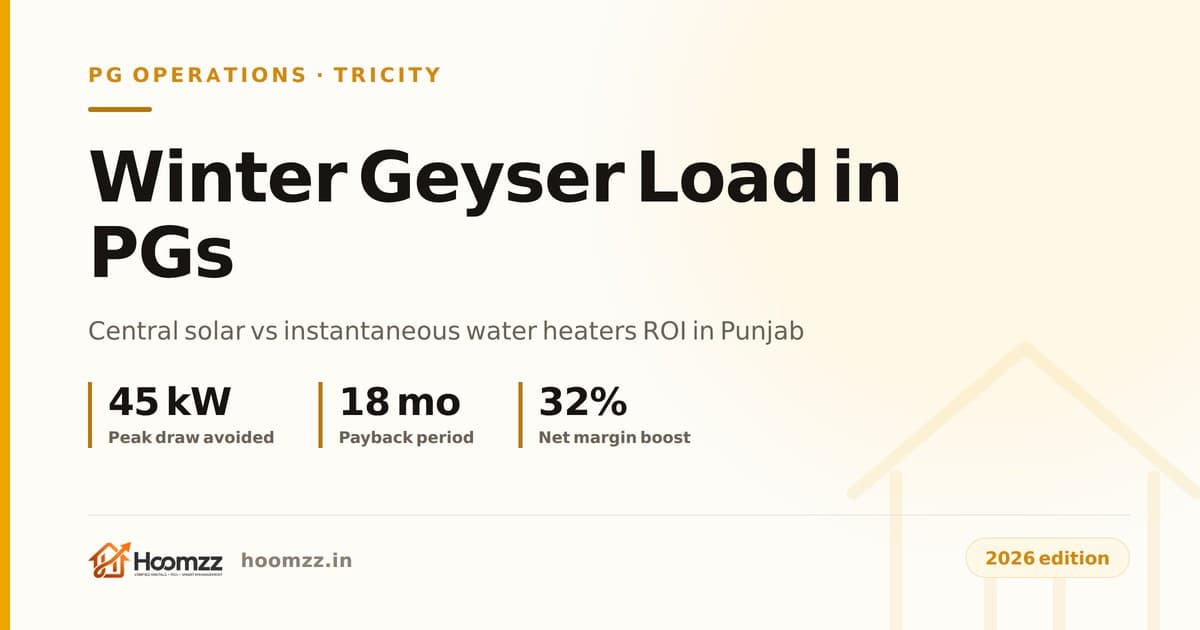
Managing winter hot water demand in a Tricity student PG can trigger massive electricity spikes, tripped breakers, and PSPCL penalties. Here is a numbers-backed ROI analysis comparing centralized solar water heating against individual instantaneous geysers for accommodation operators.
Short answer: For a 30 to 40-bed student paying guest (PG) facility in Punjab, installing a 1,000 Litres Per Day (LPD) centralized solar water heating system with Evacuated Tube Collectors (ETC) delivers a full capital payback within 18 to 22 months. In contrast to 15 individual 3 kW instantaneous geysers that create a simultaneous morning power surge of 36 kW to 45 kW—routinely tripping breakers and triggering steep PSPCL Maximum Demand Indicator (MDI) penalties—a centralized solar hybrid setup caps electrical demand at 3 kW. It cuts seasonal winter electricity bills by ₹25,000 to ₹35,000, eliminates hard water heating element burnouts, and protects net operating margins.
- 45 kWPeak Draw AvoidedStops morning MCB trips
- ₹35k+Winter Power SavedPer 30-bed facility
- 18 moCapital PaybackObserved ROI timeline
- ₹0Broker CommissionDirect bed listings on Hoomzz
Every December, student paying guest accommodations across the Tricity face a severe operational stress test. In major educational corridors like Kharar near Chandigarh University, Landran near CGC, Mohali Sector 70 and Phase 7, and the Sector 34 coaching hub in Chandigarh, outdoor temperatures plummet to 4°C to 7°C. Overnight, water sitting in overhead rooftop tanks drops below 10°C. Between 7:00 AM and 9:00 AM, dozens of students wake up simultaneously, preparing for morning lectures and laboratory sessions. In facilities equipped with decentralized instantaneous or storage geysers, every resident turns on their bathroom switch at the exact same moment.
The result is immediate electrical chaos: main circuit breakers trip, electrical panels overheat, immersion coils burn out in hard borewell water, and monthly commercial electricity bills skyrocket. While local real estate Instagram pages and creators are an active source of listings and area info for Tricity renters today, experienced operators know that operational reliability—such as unfailing winter hot water—is what actually keeps beds occupied. Hoomzz lists physically verified rentals across Chandigarh, Mohali, Panchkula and Zirakpur, connecting accommodation providers directly with students and working professionals seeking dependable housing without broker friction.
Hot water availability during peak morning hours directly determines student retention. When breakers trip and water runs cold in January, students leave at the end of the semester.
The Electrical Nightmare: Why Instantaneous Geysers Break PG Operations
Many property owners who convert residential kothis or builder floors into commercial student hostels install individual instantaneous water heaters (3 kW) or compact 15-litre storage geysers (2 kW) in every attached bathroom. On paper, decentralized units appear convenient because they avoid upfront central plumbing work. In daily practice across Punjab winters, this approach creates severe electrical bottlenecks.
1. The Simultaneous Peak Load Crisis
In a standard 15-room student accommodation hosting 30 to 45 occupants, morning bathing schedules overlap tightly between 7:15 AM and 8:45 AM. If 12 to 15 instantaneous geysers are energized concurrently, they create an immediate instantaneous electrical demand of 36 kW to 45 kW:
- 15 Instantaneous Geysers (3,000 Watts each): 45,000 Watts (45 kW) concurrent draw.
- 15 Storage Geysers (2,000 Watts each): 30,000 Watts (30 kW) concurrent draw.
- Supporting Facility Load: Commercial kitchen induction cookers, water pumping motors, refrigerators, Wi-Fi routers, and lighting push total draw past 50 kW.
Most converted PG properties operate on sanctioned electrical loads ranging from 10 kW to 20 kW under Punjab State Power Corporation Limited (PSPCL) Non-Residential Supply (Schedule NRS) or Domestic Supply (Schedule DS) connections. A 45 kW instantaneous surge instantly trips the main miniature circuit breakers (MCBs) or molded case circuit breakers (MCCBs). When breakers trip repeatedly, residents are stranded in cold showers, sparking loud resident complaints, negative online reviews, and mid-session tenant churn.
2. PSPCL Maximum Demand Indicator (MDI) Penalties
Modern electronic bi-directional and static meters installed by PSPCL log peak power demand through an integrated Maximum Demand Indicator (MDI). Under PSPCL Schedule NRS regulations for commercial consumers and medium-supply connections, fixed charges are billed on 80% of the sanctioned contract demand or the highest recorded MDI during the monthly billing cycle, whichever is higher.
When morning geyser surges force the MDI to register 35 kVA to 48 kVA against a sanctioned contract demand of 15 kVA, PSPCL automatically levies punitive demand surcharges on the excess load. Beyond immediate financial penalties, repeated MDI breaches trigger statutory notices requiring mandatory load regularisation, demanding substantial Advance Consumption Deposits (ACD) and costly electrical infrastructure upgrades.
3. Wiring Degradation and Fire Hazards
Standard domestic internal wiring in residential buildings typically uses 2.5 mm² or 4 mm² copper wiring designed for intermittent household appliances. Running multiple high-draw 15-ampere heating loads continuously through common distribution boards causes wiring conduits to heat up rapidly. Over a single winter, this continuous thermal stress degrades wire insulation, melts junction boxes, burns neutral lines, and creates real electrical fire hazards inside multi-tenant student properties.
The Borewell Hard Water Reality in Kharar and Landran
Beyond electrical load, Tricity PG operators face aggressive groundwater scaling. In high-density student belts such as Kharar, Landran, and Zirakpur, municipal canal water supply is limited or intermittent. Accommodations rely almost entirely on deep borewell groundwater, which routinely tests with Total Dissolved Solids (TDS) levels between 600 PPM and 950 PPM alongside elevated calcium and magnesium carbonate hardness.
When hard water is heated above 55°C inside small individual geyser tanks, dissolved minerals precipitate rapidly, forming a thick calcified crust over the copper immersion heating element. This mineral scaling produces two severe operational headaches:
- Rapid Thermal Efficiency Loss: A 2-millimetre layer of calcium scale acts as a thermal insulator, increasing the electricity required to heat a bucket of water by 20% to 30%. Heating cycles stretch from 12 minutes to 25 minutes, keeping geysers energized longer.
- Frequent Element Burnout: Trapped heat causes heating coils to overheat internally and rupture. A 15-bathroom student PG in Landran or Kharar typically suffers 6 to 10 element failures every winter. Replacing heating elements costs ₹800 to ₹1,200 per incident in hardware and emergency electrician visits, creating perpetual maintenance friction.
Centralized Solar Water Heating: The Engineering Architecture
A centralized solar water heating system shifts thermal energy generation from high-surge indoor resistance heating to rooftop solar thermal harvesting. By generating and storing hot water in a single, well-insulated central thermal reservoir, accommodation operators decouple hot water availability from peak morning electrical demand.
1. Sizing Guidelines for Student Hostels
Accurate system sizing is critical. Sizing too small leaves late risers with lukewarm water; oversizing increases unnecessary structural rooftop weight. For student housing in Punjab, the standard engineering metric is 25 to 35 litres of hot water per resident per day:
- 15 to 20 Beds (Small PG / Converted Kothi): 500 Litres Per Day (LPD) system.
- 30 to 45 Beds (Medium Student Hostel): 1,000 Litres Per Day (LPD) system.
- 50 to 75 Beds (Large Commercial PG Facility): 1,500 to 2,000 Litres Per Day (LPD) system.
2. Collector Technology: ETC vs FPC in Punjab Conditions
Operators must select between two primary collector designs: Evacuated Tube Collectors (ETC) and Flat Plate Collectors (FPC). For the vast majority of Tricity student PGs, ETC systems represent the superior operational choice:
- Evacuated Tube Collectors (ETC): ETC systems utilize parallel rows of double-walled borosilicate glass vacuum tubes. The vacuum layer acts as near-perfect insulation, preventing heat loss into cold winter air. ETC systems capture diffused solar radiation effectively even during hazy or overcast Punjab winter days. Crucially, the smooth glass interior resists mineral scale adhesion, making ETC far more durable in hard groundwater zones like Kharar and Landran.
- Flat Plate Collectors (FPC): FPC systems use copper absorber plates housed inside insulated metallic boxes with toughened glass tops. While FPC systems are rugged and withstand high plumbing pressure, hard borewell water causes severe mineral scaling inside narrow copper riser tubes within two to three seasons. Unless paired with a commercial water softening plant, FPCs suffer declining heat transfer in high-TDS areas.
3. Automated Electrical Hybrid Backup
Northern India experiences periodic dense winter fog during late December and early January, reducing solar thermal gain. To guarantee hot water without restoring individual geyser electrical chaos, a centralized commercial solar tank incorporates an integrated 3 kW or 6 kW commercial immersion heating element governed by an automated digital control panel:
- Controlled Operating Windows: The central backup element is connected to a digital timer programmed to energize only between 5:30 AM and 7:00 AM on dense fog mornings, elevating the insulated tank water from overnight temperatures (38°C–42°C) to bathing levels (55°C).
- Capped Electrical Surge: Even on completely sunless days, the entire 30-bed property draws a maximum of 3 kW to 6 kW for water heating—a fraction of the 45 kW instantaneous surge caused by individual bathroom units.
Operational and Financial Comparison: Central Solar vs Instantaneous Geysers
The financial advantage of a centralized solar setup becomes clear when analyzing capital expenditure, power tariffs, and maintenance costs over a standard 30-bed student facility across a 90-day Punjab winter season.
| Operational Parameter | Decentralized Instantaneous Geysers (15 Units) | Centralized Solar Hybrid System (1,000 LPD ETC) |
|---|---|---|
| Initial Hardware Cost | ₹52,000–₹65,000 (15 units @ ₹3,500–₹4,300) | ₹1,15,000–₹1,35,000 (1,000 LPD commercial ETC) |
| Plumbing & Installation | ₹12,000–₹18,000 (standard bathroom piping) | ₹28,000–₹38,000 (insulated CPVC ring main & pump) |
| Total Initial Capital Outlay | ₹64,000–₹83,000 | ₹1,43,000–₹1,73,000 |
| Simultaneous Peak Electrical Draw | 36 kW to 45 kW (Trips 15 kW–20 kW connections) | 3 kW to 6 kW (Single managed backup element) |
| PSPCL MDI Penalty Risk | Extremely high (Repeated contract demand surcharges) | Zero (Draw stays within baseline sanctioned load) |
| Daily Power Consumption (Winter) | 32 to 42 kWh (units) per day | 6 to 10 kWh (units) per day (backup only on cloudy days) |
| Seasonal Electricity Cost (90 Days) | ₹26,000–₹34,000 (@ ₹8.50/unit effective) | ₹5,000–₹8,000 (@ ₹8.50/unit effective) |
| Annual Element Maintenance | ₹5,000–₹9,000 (Multiple hard water burnouts) | ₹1,000–₹2,000 (Single central coil inspection) |
| Total Winter Operating Expense | ₹31,000–₹43,000 per season | ₹6,000–₹10,000 per season |
| Net Seasonal Operating Savings | Baseline reference | ₹25,000–₹33,000 saved per winter |
| Estimated Payback Period | Not applicable | 18 to 22 operating months (1.5 to 2 winter cycles) |
Central Solar Hybrid Works Best If
- Operating 15 or more student beds in a multi-room facility
- Facing borewell groundwater TDS above 500 PPM in Kharar or Landran
- Constrained by a 10 kW to 20 kW sanctioned electrical connection
- Seeking long-term asset value and PEDA bye-law compliance
- Aiming to eliminate morning resident cold water complaints
Instantaneous Units Work Only If
- Managing a small 4 to 8-bed residential flat with staggered schedules
- Operating on short 11-month master leases without rooftop terrace access
- Tenants pay 100% of individual submetered room electricity directly
- Surrounding multi-storey kothis create permanent rooftop winter shadows
- Sanctioned load is unconstrained and commercial wiring is newly upgraded
Regulatory Mandates: PEDA Guidelines and Building Bye-Laws
Beyond operating cost savings, property owners in Punjab must consider statutory compliance. Under directives issued by the Government of Punjab through the Department of Science, Technology, Environment and Non-Conventional Energy under Section 18 of the Energy Conservation Act, 2001, installing Bureau of Indian Standards (BIS) marked solar water heating systems is mandatory across specific building categories.
The Punjab Energy Development Agency (PEDA) coordinates these conservation mandates across state planning bodies, including the Greater Mohali Area Development Authority (GMADA) and municipal corporations:
- Mandatory Institutional Category: Hostels, residential schools, colleges, universities, and commercial lodging facilities are legally obligated to install solar water heating systems under state building bye-laws.
- Plot Size Mandates: Residential buildings constructed on plots measuring 500 square yards (1 Kanal) and above within urban planning jurisdictions must incorporate solar water heating provisions to secure completion and occupancy certificates.
- Sanctioned Load Classification: Commercial hostels and dedicated PG facilities operating outside standard domestic family occupancy fall under PSPCL Schedule NRS (Non-Residential Supply). Operating high-draw commercial geyser banks under unregularized domestic connections risks penal reclassification and back-billing under Punjab electricity supply codes.
Step-by-Step Installation Best Practices for PG Operators
To extract maximum return on investment and avoid common plumbing pitfalls, operators should follow a disciplined installation framework when deploying central solar hot water systems.
- Sizing Storage VolumeCalculate 25 to 35 litres of hot water capacity per resident bed to ensure morning shower peaks do not deplete the insulated thermal storage reservoir before all occupants bathe.
- Selecting Collector TypeChoose three-target Evacuated Tube Collectors (ETC) with borosilicate glass over copper Flat Plate Collectors when local borewell groundwater tests above 500 PPM TDS.
- Installing Composite Insulated PipingUse composite CPVC or PPR piping wrapped in 13-millimetre closed-cell nitrile rubber foam insulation to prevent distribution heat loss through external shafts during freezing Punjab nights.
- Configuring the Recirculation LoopInstall a return recirculation loop paired with a fractional horsepower bronze circulation pump and digital timer to deliver instant hot water to ground-floor taps without running buckets of cold water first.
- Automating the Electrical BackupWire the central 3 kW or 6 kW immersion heating element through an industrial contactor governed by a digital time switch set to energize strictly between 5:30 AM and 7:00 AM on overcast mornings.
- Integrating Sacrificial AnodesEquip the central storage tank with a replaceable sacrificial magnesium anode rod to attract corrosive minerals and protect the internal tank lining from aggressive groundwater pitting.
How Winter Amenity Reliability Impacts PG Margins and Student Retention
In student accommodation corridors like Landran, Kharar, and Mohali, tenant turnover is a primary destroyer of net operating profit. As detailed in our CGC Landran PG market analysis, budget beds face constant price sensitivity, while premium facilities maintain occupancy by delivering reliable daily infrastructure. A facility that suffers repeated morning power outages and cold water in December loses student residents during the mid-year semester break.
As explored in our operational guide on retaining student PG tenants in Tricity, basic amenity reliability outranks superficial perks like gaming consoles or branded decor. Providing continuous, piping-hot showers without tripped breakers builds direct word-of-mouth trust among college peers. When students renew their annual tenancies rather than relocating, operators avoid the steep turnover costs of vacant rooms and broker fees.
Accommodations that streamline their operations can bypass traditional middlemen entirely. By choosing to list their PG rooms and beds on Hoomzz, property owners connect directly with verified students and working professionals. Prospective tenants can also browse verified PGs in Tricity with full confidence in physically verified listing details, while operators utilize PG operational expense and rental yield calculators to optimize their annual returns.
Frequently Asked Questions
What is the average profit margin of a PG in Tricity?
A well-managed paying guest accommodation in the Tricity typically achieves a net profit margin between 28% and 38% for self-owned properties, or 18% to 26% for leased assets. While gross rental collections appear lucrative, unmanaged winter utility bills, grocery inflation for mess meals, commercial power tariffs, and summer vacancy dips compress real earnings if operational costs are not strictly controlled.
How does listing rooms and beds on Hoomzz reduce middleman commission?
Listing directly on Hoomzz connects PG operators directly with verified students and working professionals without paying intermediaries 15 to 30 days of rent per occupied bed. Because Hoomzz conducts physical verification of listings across Chandigarh, Mohali, Panchkula, and Zirakpur, prospective tenants trust the listed tariffs and room photos, eliminating offline brokerage commissions entirely.
What are the key security and safety installations required by local authorities?
Local authorities across SAS Nagar and Chandigarh districts enforce mandatory police tenant verification under Section 223 BNS through the Punjab Police Saanjh Kendra network. PG operators must also install functional ISI-marked ABC and CO2 fire extinguishers on every floor, keep corridors and staircases unobstructed, and maintain detailed visitor entry registers to remain fully compliant with standing preventive orders.
How do seasonal university cycles affect PG cash flow?
Tricity universities and colleges complete annual semester examinations by mid-May, prompting students to return home until late July. If an operator fails to implement a summer luggage retainer model charging 25% to 35% of monthly rent, building occupancy drops sharply, wiping out two to three months of rental revenue and damaging annual yields.
Which solar collector type handles hard borewell water better in Kharar and Landran: ETC or FPC?
Evacuated Tube Collectors (ETC) perform substantially better than Flat Plate Collectors (FPC) in high-TDS groundwater zones like Kharar and Landran. The smooth borosilicate glass vacuum tubes of ETC systems resist mineral scale adhesion, whereas the narrow copper fluid channels in FPC panels clog rapidly with calcium scale, diminishing heat transfer within two seasons unless paired with expensive water softeners.
How does central solar water heating prevent PSPCL MDI penalties during peak winter mornings?
A centralized solar water heater replaces 15 to 20 individual 3 kW bathroom geysers with a single rooftop thermal reservoir backed by one automated 3 kW or 6 kW immersion heating element. By capping the property's water heating demand to a controlled 3 kW window rather than an uncontrolled 45 kW simultaneous surge, the facility's Maximum Demand Indicator stays well within sanctioned contract limits, preventing punitive PSPCL surcharges.
Sources, and what here is judgement rather than data
This operational analysis rests on established utility tariff regulations, statutory building codes, and observed field metrics across the Tricity rental market:
- PSPCL Tariffs & Demand Charges: Non-Residential Supply (Schedule NRS) rate structures, Maximum Demand Indicator (MDI) billing rules, and peak load conservation advisories are drawn directly from official notifications published by the Punjab State Power Corporation Limited (PSPCL).
- Mandatory Solar Heating Directives: Building bye-law amendments, institutional mandates, and energy conservation rules for hostels and 500 sq yd plots are sourced from guidelines issued by the Punjab Energy Development Agency (PEDA) under the Energy Conservation Act, 2001.
- Winter Grid Stress & Heating Appliance Load: Peak winter domestic load surges, morning demand spikes, and power distribution constraints are informed by reporting from The Tribune India.
- Groundwater Hardness & Capital Cost Estimates: Borewell TDS ranges (600–950 PPM) in Kharar and Landran, collector hardware pricing (₹1,15,000–₹1,35,000 for 1,000 LPD ETC), and 18 to 22-month payback timelines represent editorial calculations based on observed supplier quotes and field contractor interviews across Mohali district.
Operational judgements—including recommendations favoring ETC over FPC in borewell areas and the retention benefits of uninterrupted hot water—reflect engineering trade-offs rather than statutory guarantees. Operators should conduct independent water TDS testing and assess specific building structural capacities before commissioning rooftop solar installations.
👈 This comparison is based on market observations and publicly available data. Users should verify details independently.
Prioritize Hoomzz Real Estate News in your Google Search AI Overviews
Google's new search update lets you select trusted sources. Pin hoomzz.in to get our instant local market rates, builder updates, and renting news featured first in your AI answers.
Find Verified PGs & Hostels
Safe, hygienic AC/Non-AC PG accommodations with meals, Wi-Fi & zero broker markups in Tricity.