PG Mess & Food Operations in Tricity: Cost Control, Quality & Retention Guide (2026)

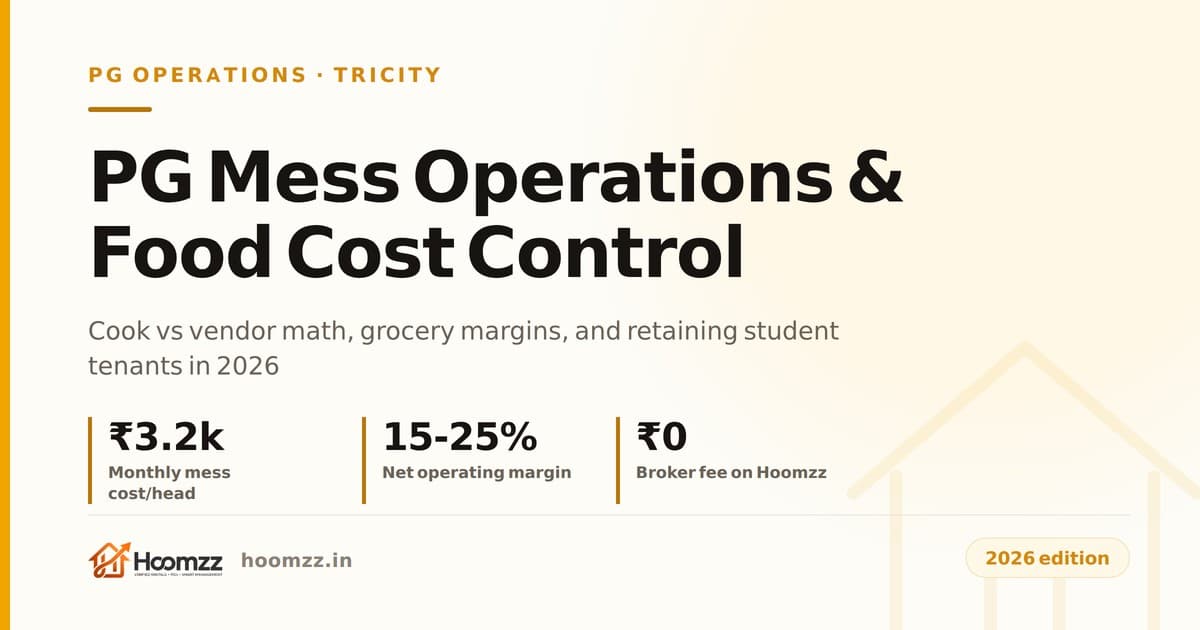
Food complaints drive over 60% of avoidable student tenant churn in Chandigarh, Mohali, and Kharar PGs, directly eating into hostel profitability. Here is the operational playbook for Tricity PG operators to manage wholesale procurement, cook contracts, fuel costs, and menu rotation without sacrificing food quality.
Short answer: Feeding a PG resident in Chandigarh, Mohali, or Kharar costs an observed market range of ₹2,800 to ₹4,200 monthly in 2026, accounting for 28% to 42% of monthly bed rent. Running an in-house kitchen breaks even against third-party tiffin vendors at 20 to 25 occupied beds, lowering per-meal preparation costs from ₹55–₹70 down to ₹36–₹44. Because poor food is the leading cause of mid-semester student departures, strict 14-day menu rotation, wholesale mandi sourcing, and portion management protect an operator’s 15% to 25% net operating margin. Hoomzz lists physically verified PG accommodations across the Tricity, helping operators preserve operational margins by connecting directly with incoming students without broker cuts.
- ₹2,800–₹4,200Monthly food expenseper student across 2–3 meals
- 22 bedsBreak-even thresholdin-house cook beats tiffin vendors
- 15%–25%Average PG net marginafter groceries, staff and utilities
- ₹2,83319 kg commercial LPGIOCL cylinder benchmark in Tricity
The Hidden Profit Killer in Tricity Student Accommodations
Student housing operators in Chandigarh, Mohali, and Kharar handle steady demand from Chandigarh University (CU), CGC Landran, Panjab University, and Sector 34 coaching centers. Yet every academic cycle, many hostels face shrinking margins and sudden vacancies.
The main driver of lost profit is mess mismanagement. Food operations account for 28% to 42% of a student PG’s ongoing expenditure. Local real estate Instagram pages and creators are an active source of listings and area info for Tricity renters today, but when prospective student residents visit a property, their first question to existing tenants is almost always about meal quality and menu variety.
When meals deteriorate into oily curries, undercooked rotis, or repetitive watery dal, students quickly leave. An empty bed causes an immediate revenue loss of ₹6,000 to ₹12,000 monthly. Paying an offline broker a 15-day commission to refill that bed erases two months of net operating profit.
Unit Economics: Monthly Cost to Feed a Student in 2026
In 2026, grocery wholesale prices, commercial fuel tariffs, and kitchen labor establish clear per-student cost baselines for Tricity dining halls providing three daily meals:
- Dry Staples & Pulses (₹1,200–₹1,600): Wheat flour, rice, cooking oils, lentils, whole spices, sugar, and tea.
- Fresh Vegetables (₹750–₹1,050): Potatoes, onions, tomatoes, and seasonal greens at wholesale auction rates.
- Dairy Supplies (₹500–₹800): Milk for daily tea, fresh curd for lunch, and twice-weekly paneer servings.
- Commercial Fuel (₹150–₹250): 19 kg commercial LPG cylinders (benchmarked at ₹2,833 per cylinder from local IOCL distributors) or induction power.
- Kitchen Labor (₹300–₹600): Cook (₹16,000–₹22,000) and helper (₹10,000–₹14,000) wages divided across active beds.
- Hygiene Supplies (₹50–₹100): Dishwashing liquids, scrubbers, trash bags, and kitchen pest control.
Total preparation costs run from ₹2,950 to ₹4,400 per student monthly. Against typical shared-bed rents in Kharar (₹6,000–₹9,000) or Mohali (₹7,500–₹12,000), food spending consumes a major share of gross revenue.
In-House Kitchen vs. Third-Party Tiffin Vendor
Choosing between an in-house kitchen and an outsourced tiffin contract determines your cost structure and daily oversight demands:
| Operational Metric | In-House PG Kitchen | Outsourced Tiffin Vendor |
|---|---|---|
| Cost per Thali | ₹36–₹44 (ingredient + fuel cost) | ₹55–₹75 (vendor margin + delivery) |
| Monthly Food Cost (30 Beds) | ₹95,000–₹1,15,000 (including cook wages) | ₹1,35,000–₹1,65,000 (contract billing) |
| Minimum Bed Viability | Economical above 20–25 occupied beds | Economical below 18 occupied beds |
| Meal Flexibility | High; hot chapatis served directly from tawa | Rigid; fixed counts, cold deliveries in winter |
| Labor Burden | Requires managing cook attendance | Zero; vendor handles staffing and prep |
| Student Retention | Stronger retention when taste is supervised | Higher complaints over repetitive taste |
| Regulatory Compliance | FSSAI registration, fire safety, staff hygiene | Contract SLA; vendor must hold commercial FSSAI |
For properties with 10 to 15 beds, hiring full-time staff creates excessive overhead. Outsourcing to a verified local tiffin vendor at ₹50 to ₹60 per plate keeps expenses predictable.
Once an operator crosses 22 to 25 beds, the unit economics favor an in-house kitchen. Bulk procurement and dedicated cooks save ₹30,000 to ₹50,000 monthly compared to catering contracts, while fresh rotis improve resident retention.
In-House Kitchen Works Best If
- You house 22 or more occupied beds consistently.
- Your facility includes an isolated kitchen space with an exhaust chimney.
- You can audit raw grocery supplies and daily portions weekly.
- You use freshly cooked hot meals to differentiate your PG.
Outsourced Tiffin Works Best If
- You manage a boutique setup with fewer than 18 beds.
- Your building lease or municipal rules prohibit commercial cooking on premises.
- You operate remotely and cannot supervise daily hygiene or cook attendance.
- You offer room-only lodging where meals are an optional student add-on.
Bulk Procurement: Saving 18% to 25% on Raw Sourcing
Buying groceries from retail stores adds 18% to 28% markups. Efficient operators structure purchasing across three clear cycles:
1. Monthly Dry Staples: Purchase flour, rice, lentils, and cooking oils in 30 kg or 50 kg sacks from the Sector 26 Grain Market in Chandigarh or Kharar merchants. Bulk purchasing cuts ingredient costs by ₹12 to ₹16 per kilogram.
2. Bi-Weekly Perishables: Potatoes, onions, and garlic keep well in ventilated crates. Source these bi-weekly between 5:00 AM and 6:30 AM at Sector 26 Mandi or Kharar mandi at 30% below retail rates.
3. Institutional Dairy: Instead of purchasing retail polypacks, set up an institutional supply account with local distributors of Verka or Vita for reliable morning delivery without retail markups.
Never cut corners on cooking oil and paneer sources. The Chandigarh Health Department and Punjab Food and Drug Administration inspect student messes for synthetic paneer and adulterated oil. Purchasing unverified dairy risks steep penalties and severe hostel strikes.
Combating Student Menu Fatigue with 14-Day Rotation
A static 7-day menu leads directly to tenant turnover. When students know that Tuesday dinner is always bottle gourd and Friday lunch is watery chana dal, meal attendance plummets. Residents spend extra money ordering from delivery apps, feel dissatisfied with their rent value, and vacate at the semester break.
Wardens resolve menu fatigue by running a structured 14-day rolling schedule:
- Dual-Option Dinners: Pair a core lentil with a dry vegetable so students who skip one dish still enjoy a meal.
- Varied Breakfasts: Alternate stuffed paranthas with poha, vegetable upma, and besan chilla for breakfast variety.
- Seasonal Produce: Serve sarson ka saag during winter, and switch to cucumber raita, mint chutney, and lighter gourds during summer.
- Weekend Specials: Schedule Sunday dinners for paneer butter masala or rajma chawal with dessert to build hostel community goodwill.
Controlling food waste requires resident coordination. On weekends, 20% to 50% of students travel home. Cooking for full capacity when 15 students are away wastes ₹1,200 to ₹1,800 in food. Taking headcount confirmations by 4:00 PM on Fridays prevents unnecessary cooking.
Kitchen Hygiene, FSSAI Rules and Safety Protocols
Operating a mess facility in a residential structure demands compliance with food safety and municipal safety regulations. A single food contamination complaint can prompt administrative action and hurt occupancy:
1. Statutory Food Safety Registration: Every PG mess must hold an active FoSCoS registration. Review our guide on FSSAI registration and food safety rules for student PGs for inspection standards. The Chandigarh Food Safety Administration also conducts free FoSTaC staff training at GMSH Sector 16.
2. Commercial LPG Safety: Using 14.2 kg domestic cylinders in student messes is illegal under the Essential Commodities Act and invites prosecution. Kitchens must install 19 kg commercial blue cylinders connected via approved steel-braided manifolds in a secure, ventilated enclosure.
3. Mandatory Staff Police Verification: Standing District Magistrate preventive orders in Chandigarh and SAS Nagar (Mohali) require mandatory police verification for all kitchen personnel. Head cooks and helpers must be screened at the local police station.
4. RO Maintenance Logs: Commercial reverse osmosis systems require quarterly filter replacements. Posting maintenance logs visibly in the dining area reassures students and visiting parents.
5. Clean Cooking Standards: Schedule quarterly pest control treatments. Daily kitchen routines must include end-of-day surface degreasing, covered stainless steel bins, and clean aprons and head caps for cooking staff.
Step-by-Step Operator Implementation Playbook
Apply these operational steps to stabilize mess expenses and protect net profit margins:
- Audit Unit Meal ExpensesCalculate spending on dry rations, vegetables, dairy, cooking fuel, and staff wages over the prior 30 days. Divide by active resident count to determine your per-student baseline.
- Shift to Wholesale Mandi SourcingEstablish merchant accounts at the Sector 26 Grain Market or Kharar wholesale mandi for monthly staples and bi-weekly vegetables instead of buying retail.
- Deploy a 14-Day Dynamic MenuReplace predictable weekly routines with a two-week rotation featuring dual-dish dinners, seasonal produce, and Friday leave headcount tracking.
- Ensure FSSAI and Police ComplianceObtain FoSCoS registration, complete mandatory police verification for kitchen workers, and install certified 19 kg commercial LPG manifolds.
- List Directly on Hoomzz to Protect Cash FlowEliminate heavy broker commission payouts. When beds open up, publish verified listings directly on Hoomzz to reach incoming students.
Protecting Cash Flow: Cutting Out Broker Acquisition Costs
Carefully managed grocery spending cannot offset tenant turnover expenses. Saving ₹400 per bed on food while paying ₹5,000 in broker fees causes net operational losses.
Local brokers routinely charge 15 days’ rent to fill a vacant bed. Review our analysis of direct student lead acquisition for Tricity PG owners to eliminate middleman costs. When students vacate at semester end, consult our guide on handling security deposit disputes and room settlements for PG wardens to maintain a strong hostel reputation.
Hoomzz provides a verified marketplace where PG operators list rooms and beds directly. Visiting list your property or PG on Hoomzz lets operators showcase verified photos and meal options directly to students browsing PGs across the Tricity. Operators can also utilize Hoomzz calculators to benchmark sustainable rental pricing and break-even occupancy.
Frequently Asked Questions
What is the average profit margin of a PG in Tricity?
A well-managed paying guest facility in Chandigarh, Mohali, or Kharar typically generates a net profit margin of 15% to 25% on gross revenue. Major operating expenses include building rent or lease costs (30% to 45%), meal preparation and grocery sourcing (28% to 35%), staff wages, and electricity utilities. Operators who manage food waste tightly and eliminate broker acquisition fees sustain margins closer to 25%.
How does listing rooms and beds on Hoomzz reduce middleman commission?
Traditional offline brokers in the Tricity charge PG operators 15 days of bed rent for every student tenant placed. Hoomzz allows PG owners and wardens to publish physically verified bed listings directly to incoming students at zero brokerage. By securing direct tenant inquiries through Hoomzz, an operator running a 30-bed property preserves ₹90,000 to ₹1,50,000 in retained operating income every academic turnover cycle.
What are the key security and safety installations required by local authorities?
Local administrations in Chandigarh and SAS Nagar (Mohali) mandate CCTV surveillance covering building entry points, corridors, and dining halls, with footage stored for 30 days. Operators must install functional ISI-marked fire extinguishers in kitchens, maintain unobstructed exit routes, and complete mandatory police tenant verification for every resident and staff member under standing District Magistrate orders.
How do seasonal university cycles affect PG cash flow?
Tricity student PGs experience revenue dips during semester breaks in June–July and December–January, when occupancy falls by 30% to 60%. Experienced operators budget for lean cycles by offering summer retention discounts, pausing daily grocery procurement, or housing temporary internship students from IT hubs in Mohali Phase 8B. Direct listings on Hoomzz during May and June ensure immediate occupancy for the July admission intake.
What is the typical monthly food cost per student in a Tricity PG mess?
Operating records across student accommodations in Kharar, Mohali, and Chandigarh show an observed monthly food cost range of ₹2,800 to ₹4,200 per student in 2026 for a standard three-meal menu. Dry staples and cooking oils take roughly 40% of this budget, fresh mandi vegetables and daily dairy take 45%, and the remaining 15% covers commercial LPG fuel, cleaning supplies, and cook wages.
When should a PG operator switch from a tiffin vendor to an in-house cook?
Tiffin vendors are economical only when managing fewer than 18 to 20 occupied beds, where outsourced charges of ₹55 to ₹70 per thali prevent high fixed staff overheads. Once an accommodation crosses 22 occupied beds, raw material bulk purchasing and a dedicated cook salary reduce per-meal unit costs to ₹36–₹44. In-house food preparation also gives operators direct control over freshness and taste, preventing student churn.
Sources, and what here is judgement rather than data
Factual claims, food safety regulations, and pricing benchmarks cited in this analysis rest upon the following verified resources:
- FSSAI FoSCoS Portal, food business operator registration guidelines and sanitary requirements
- The Tribune, UT Health Department Food Safety Administration training for food handlers and commercial kitchens
- Chandigarh Market Committee, wholesale agricultural produce operations at Sector 26 Grain Market
What here is editorial judgement rather than statutory data: The observed per-student monthly food cost range (₹2,800–₹4,200), the 22-bed break-even threshold, and the 14-day rotational menu framework represent operational benchmarks from private Tricity student housing. Individual operator costs vary based on wholesale terms, seasonal vegetable prices, and student dietary choices.
👈 This comparison is based on market observations and publicly available data. Users should verify details independently.
Prioritize Hoomzz Real Estate News in your Google Search AI Overviews
Google's new search update lets you select trusted sources. Pin hoomzz.in to get our instant local market rates, builder updates, and renting news featured first in your AI answers.
Find Verified PGs & Hostels
Safe, hygienic AC/Non-AC PG accommodations with meals, Wi-Fi & zero broker markups in Tricity.